
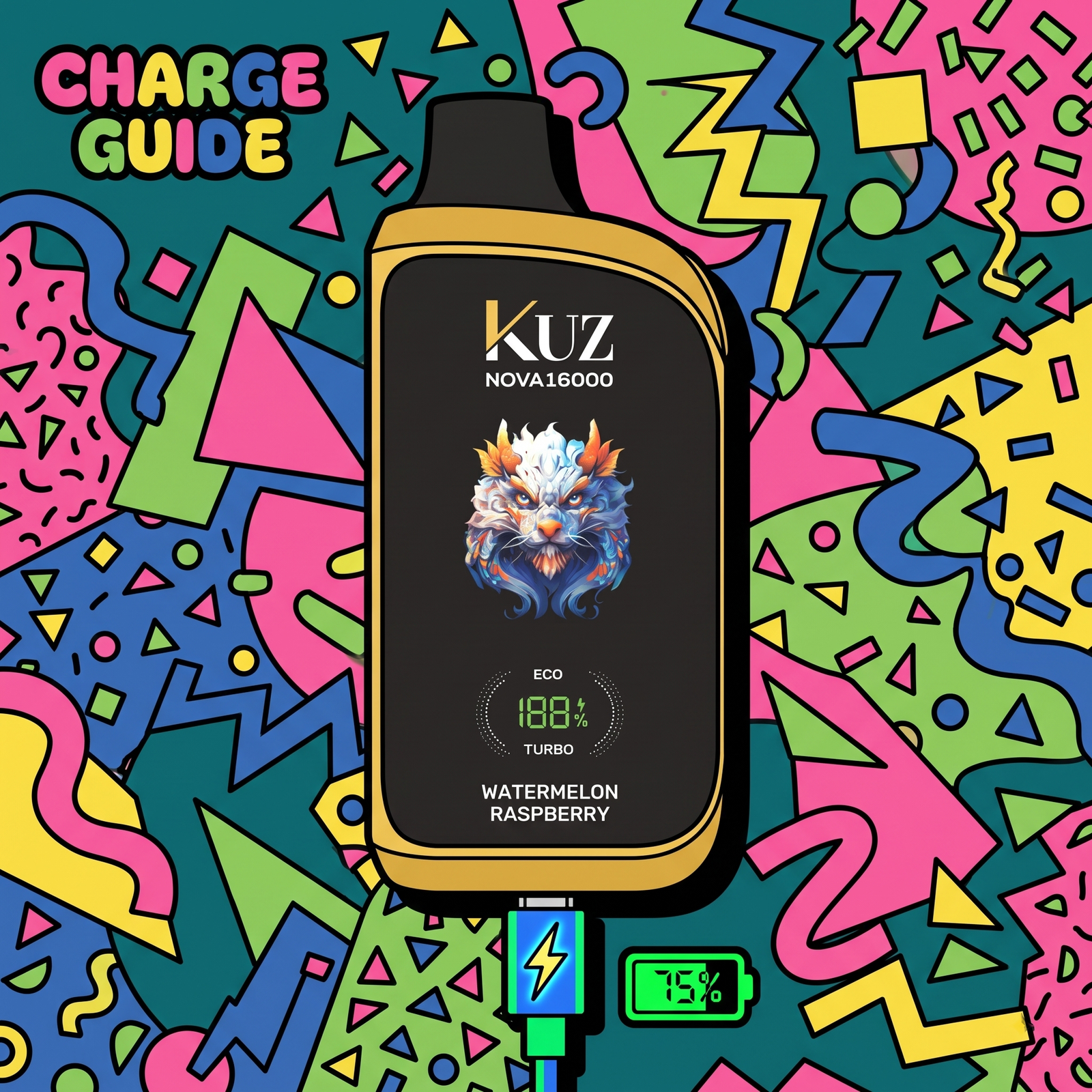
How to Charge a KUZ C6000 (2026): Safe Charging, Explained
The Short Version (For the Impatient)
You’re on the couch after work, reach for the C6000, and nothing happens — no vapour, no light. Before you toss it in the bin, here’s the honest answer up front: the KUZ C6000 runs on a chargeable 850 milliamp-hour battery, and charging it is a two-minute job with a standard cable and any sensible charger. You plug it in, wait for the charge signal, unplug it when it’s full, and keep vaping until the 8.5 mL tank runs dry — that’s when the device’s life ends, not when the battery dies. The three habits that kill compact disposables are overnight charging, high-wattage fast chargers and charging a damaged or wet device, and we cover all three below. We’ll also cover how often to charge, a healthy routine, and when to stop charging for good — it takes about five minutes to read.
1. The KUZ C6000 at a Glance
Before we touch a cable, here’s the spec sheet — the numbers that are actually confirmed, straight from market-published specs.
| Spec | KUZ C6000 |
|---|---|
| Puff count (rated) | 6,000 |
| E-liquid capacity | 8.5 mL |
| Battery | 850 milliamp-hour, chargeable |
| Nicotine strength | 5% (50 mg) nicotine salt |
| Family position | Entry-level budget device |
| Typical market price | A$39 |
What this means for charging: the C6000 is the entry-level budget device of the KUZ family — the cheapest tier of the lineup, with a smaller cell than the 1000 milliamp-hour battery on the KUZ Lux 9000. A smaller cell charges relatively quickly, but it also means the battery won’t outlast the liquid: you’ll be topping up well before the 8.5 mL tank is empty. That’s completely normal and by design — chargeable disposables are meant to be topped up, not thrown away when the battery runs flat. One honesty note: puff counts and battery figures are published ratings, not guarantees.
2. What You Need to Charge It
Good news: you probably already own everything you need.
- The charging cable — the one that came in the box, or any standard phone-style cable that fits the device’s charging slot. The exact port type isn’t part of the published spec sheet, so if in doubt, use the cable that shipped with the device.
- A standard charger — a normal phone charger or a laptop slot is perfect. More on why “bigger is not better” below.
- A flat, dry surface — next to your bed, on the kitchen bench, wherever you’ll remember it. Avoid bathrooms and windowsills.
That’s the whole kit. If you’ve lost the original cable, any compatible standard cable will do the job — just make sure it seats firmly in the slot and doesn’t wobble while charging.
3. How to Charge It: Step by Step
Charging a KUZ C6000 takes about two minutes of your time:
- Check the device. If the battery is flat, the device simply won’t produce vapour — that’s your cue to charge.
- Plug the cable into the charger first, then the device. Connecting the device before the power source avoids sparking at the slot.
- Plug in and let it sit. Leave the device flat or standing — no need to hold it, and don’t vape while charging; many devices won’t fire anyway.
- Watch for the full signal. Most devices in this class show charge state with a light or indicator; when it signals full — or after a reasonable charge session — unplug.
- Unplug by the connector, not the cable. Pull gently from the device end so you don’t stress the slot.
- Give it a minute before use. A freshly charged device performs best once the cell settles.
That’s it. There’s no official charging-time figure in the published specs, but a compact cell like this takes a couple of hours from flat on a standard charger — don’t babysit it.
4. How Often Should You Charge It?
The honest answer: more often than a flagship 15K device, less often than a phone.
At 850 milliamp-hour, this is a smaller cell than the batteries in the big high-puff flagships — that’s the trade-off for the entry-level price. Most owners top up at their desk or at home in the evening and rarely hit a flat battery mid-day. The exact hours-per-charge figure isn’t in the published specs, so treat specific claims with suspicion — what matters is the routine.
The important part is what charging buys you: the battery no longer decides when the device dies — the liquid does. When the 8.5 mL tank runs dry, the device’s life is over; until then, a charge is all it needs. That’s the difference between the C6000 and cheaper single-use units — the classic IGET Bar at the same puff count is non-rechargeable, so when its battery dies, the device is done even if liquid remains — and it’s a big part of the value at the A$39 typical market price.
5. Charging Mistakes That Kill Disposables
These are the habits that send compact disposables to the bin early:
- Overnight charging, every night. Leaving a sealed cell on charge for eight-plus hours repeatedly stresses it.
- High-wattage fast chargers. A fast phone charger pushes more current than a sealed disposable is designed for — a standard charger is far gentler.
- Charging a wet or damaged device. Dropped, cracked or dunked — don’t charge it, retire it. Same rule as any lithium-powered device.
- Charging in extreme heat. A hot car dashboard or direct summer sun while charging is a genuine no-no. Charge somewhere cool and dry.
- Ignoring the smell of burnt plastic. If the device smells odd or gets hot to the touch while charging, unplug it immediately and don’t use it again.
Follow those five rules and the battery will comfortably see you through the liquid.
6. When to Stop Charging It for Good
Every charging routine needs an ending. Here’s how you know the C6000 is done:
- The flavour drops off or tastes burnt — the tank is nearly dry or the wick is spent. Charging won’t fix that.
- The device stops producing vapour even after a full charge — the liquid is gone and the device’s rated life is over.
- It’s been dropped, cracked or exposed to water — retire it immediately, regardless of charge level.
When that happens, dispose of it responsibly: it contains a sealed battery and e-liquid, so it shouldn’t go in the regular household bin. Many vape retailers and council e-waste programs accept sealed disposables — it keeps lithium out of landfill.
7. If You Can’t Find a KUZ C6000
One honest note: Cloud Collective doesn’t currently stock the KUZ C6000, so we can’t sell you one or quote you a price. If you’d rather grab something in stock and ready to ship now, browse what’s in stock at Cloud Collective — the compact WALA POP 10000 and the high-puff WALA YO 18000 are both strong chargeable alternatives in the same value space. Orders ship in unmarked packaging with tracking, 5–10 business days Australia-wide and free shipping over A$100, and every order earns Cloud Storm rewards points. Buy from a licensed Australian retailer that verifies your age at checkout.
8. FAQ
Can I leave my KUZ C6000 charging overnight?
Better not. Repeated overnight charging stresses a sealed cell. Charge while you’re around and unplug when the indicator shows full — it takes two minutes.
How often do I need to charge the C6000?
No official figure exists, so treat specific claims with suspicion. The practical routine: top up when the device gets weak, and keep charging until the 8.5 mL tank runs dry — after that, it’s done.
Is the battery replaceable?
No — like every disposable in this class, the battery is sealed and non-replaceable. When the tank is empty, the device’s life is over.
Can I use a fast phone charger?
We’d avoid it. A high-wattage fast charger pushes more current than a sealed disposable is designed for; a standard charger is gentler and plenty quick.
How do I know when the KUZ C6000 is fully charged?
Most devices in this class signal charge state with a light or indicator; when it signals full, unplug. If yours has no indicator, a couple of hours on a standard charger is a safe session.
When should I stop charging my C6000 for good?
When the flavour turns burnt, when it stops producing vapour even after a full charge, or if it’s been damaged or wet. That’s the end of its rated life — dispose of it responsibly.