
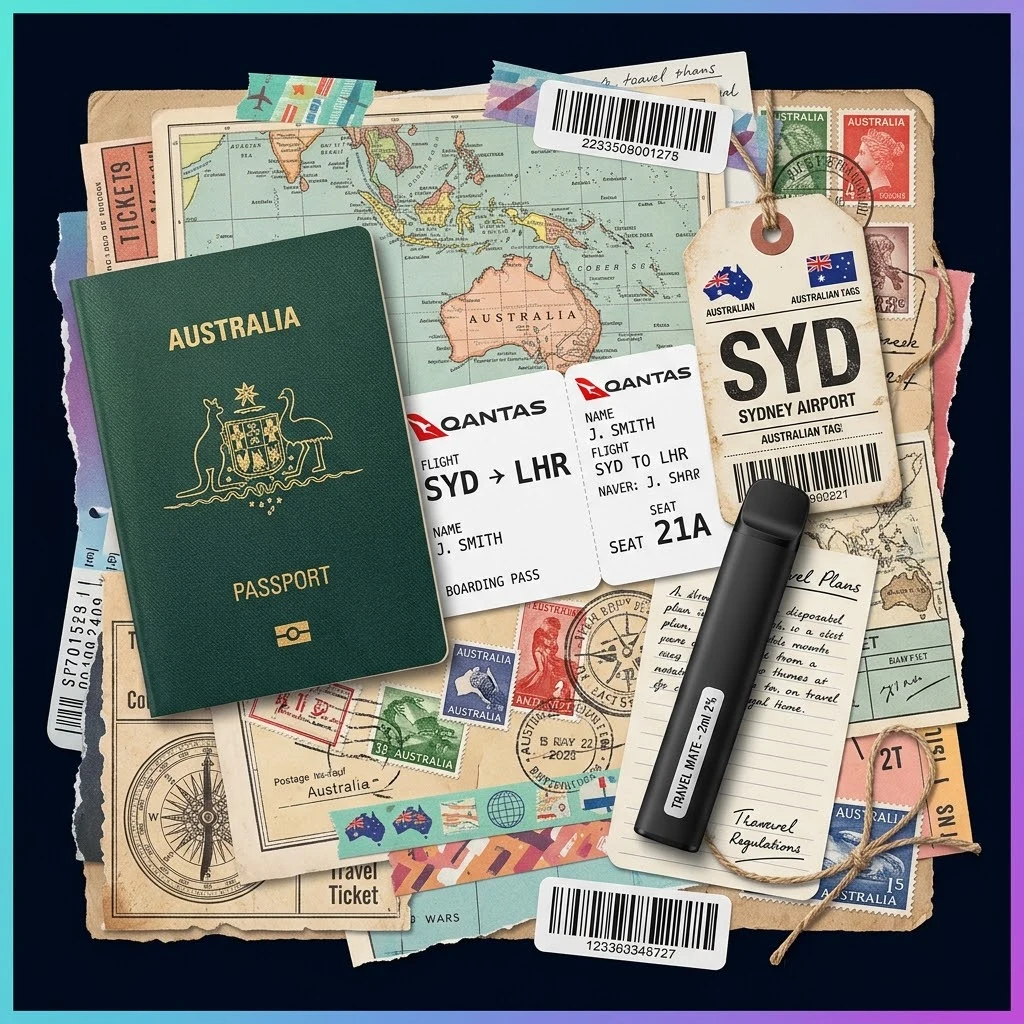
Flying With Vapes Abroad From Australia: Destination Rules Checklist (2026)
The Short Version (For the Impatient)
You can fly out of Australia with your vape — but the rules that really matter are at your destination, and they vary enormously. The Australian side is consistent: your vape and spare batteries go in carry-on (the lithium battery rule), you can’t vape on the plane, and nicotine products sit inside the TGA framework, which changed significantly in 2024. The destination side is where travellers get caught out: Singapore bans vapes outright with serious penalties, Japan restricts nicotine, and other countries range from regulated-and-legal to genuinely unclear. Never assume Australian rules apply overseas, never hide a vape in checked luggage, and check official sources — your airline, the destination’s customs authority or embassy — before you book. On the Australian side, the Civil Aviation Safety Authority’s Pack Right guide lists vapes and e-cigarettes among common dangerous goods. Full checklist below.
1. The Two Rulebooks on Every International Flight
Flying internationally with a vape means dealing with three layers of rules — and most travellers only think about one of them:
- The airline layer — the same everywhere: lithium battery devices fly in carry-on, nothing battery-powered goes in checked luggage, no vaping on board.
- The Australian exit layer — the TGA framework and the Australian Border Force (ABF) regulate nicotine products, including what you take out of the country.
- The destination entry layer — the country you’re flying into decides what happens to you and your vape at the other end — the layer that actually gets people arrested, fined or confiscated.
Here’s the uncomfortable truth: your rights in Australia mean nothing at the destination. A vape that’s perfectly legal in Sydney can be a serious offence in Singapore. Research the destination before you pack, not after you land.
2. Leaving Australia: ABF and the TGA Framework
The Australian side of the equation is a framework, not a fixed list of rules — and it’s been changing fast.
- TGA: since 2024, Australia has been phasing in a prescription model for nicotine vapes. The rules around supply, import and personal possession have tightened in stages, with further changes announced — so the honest advice is to check the TGA website for current rules rather than rely on anything you read last year.
- ABF: the Australian Border Force regulates personal imports of nicotine products, and personal import rules changed in 2024. If you’re carrying nicotine vapes out of the country, keep quantities to personal use and know the current rules.
- The 18+ line: everywhere in Australia, the purchase age is 18. That doesn’t change when you cross a border — and neither does your responsibility to know the rules at the other end.
This isn’t legal advice — verify current rules with the TGA and ABF before you travel.
3. Destination Rules: The Frameworks You Need to Know
No article can give a complete up-to-date legal picture for every country — rules change constantly. What we can give you is the well-established framework for popular destinations, so you know which ones need serious research before you pack a vape:
| Destination | Framework (at the time of writing — always verify) |
|---|---|
| Singapore | Among the strictest regimes in the world — vapes are comprehensively banned, including possession. Penalties are serious. Do not travel there with a vape. |
| Thailand | Import and sale of vapes is banned. Enforcement on tourists has been inconsistent — but “inconsistent enforcement” is not a plan. |
| Japan | Nicotine e-liquid is restricted — vapes containing nicotine are effectively illegal to bring in without authorisation. Zero-nicotine devices are sold openly. |
| Indonesia (incl. Bali) | Less clear-cut — vaping isn’t comprehensively banned, but import rules are murky and enforcement varies. Verify with Indonesian customs before you fly. |
| New Zealand | One of the more straightforward frameworks for Australians — nicotine vapes are legal for 18+ under a regulated retail model. |
| UK / EU / USA | Generally legal for 18+ with restrictions — the EU caps nicotine strengths under its Tobacco Products Directive, the US varies state by state, and the UK has its own strength and tank rules. Legal but regulated — check specifics. |
The countries closest to home aren’t automatically the safest bets. Bali might be ambiguous; Singapore is a hard no. Check the destination’s official customs or embassy website — twice: at booking and before packing.
4. The Airline Layer: Same Lithium Battery Rules
Airline rules on international flights are the same as domestic, because they’re set by global aviation safety frameworks, not any single country:
- Vapes and spare lithium batteries: carry-on only. Checked luggage is a hard no, on every airline, everywhere.
- No vaping on board: every airline prohibits it, and doing it in the bathroom triggers smoke detectors. On international routes it’s treated particularly seriously.
- E-liquid: subject to the standard carry-on liquid limits; larger bottles only if the airline allows them in checked luggage — check before you pack.
- Power banks and charging cases: carry-on, terminals protected. No charging lithium devices on board.
These rules don’t change by destination. What changes is what happens to you at the other end.
5. Bringing Vapes Back Into Australia: The Return Leg
The return trip is where a surprising number of travellers get caught — partly because they assume “it’s fine, I bought it legally overseas”, and partly because they don’t realise Australia’s personal import rules changed in 2024.
- ABF regulates personal imports of nicotine products, and rules tightened under the new TGA framework. Bringing nicotine vapes back into Australia sits inside those rules — and you’re expected to know them.
- Seizure is a real risk. The ABF actively screens incoming passengers and parcels for vapes, and non-compliant nicotine products can be seized, with penalties possible. We won’t quote specific penalty amounts — they change, and the framework is the point.
- Declare honestly if asked, and check the current ABF and TGA rules before you fly home — the rules you left with may not be the rules you return to.
- The practical approach: only bring back what the current rules allow for personal use, and when in doubt, leave it behind.
6. If Your Destination Bans Vapes: What to Do Instead
If your destination bans vapes outright — Singapore being the clear example — the answer is simple and non-negotiable: don’t take one. Don’t hide it in your bag, don’t tape it to your body, don’t try to beat the scanners. Customs officials in these countries are experienced, penalties are serious, and getting caught can mean confiscation, heavy fines or worse. It’s not worth a holiday.
Alternatives that actually work:
- Leave the vape at home — it’ll still be there when you get back. No vape collection has ever suffered from a week away.
- Use the trip as a break — many vapers treat international travel as a natural tolerance reset. If you’re going to try, check with a health professional first; nicotine withdrawal is real and can put a dampener on a holiday.
- Research alternatives at the destination — only if the destination actually permits them, and only through legitimate channels. Never buy black-market vapes in a country with unclear rules.
7. Pre-Flight Checklist
The complete international vape travel plan, in order:
- [ ] Check the destination — official customs/embassy website for current vape rules
- [ ] Check the airline — carry-on rules, liquid limits, battery policies
- [ ] Check the Australian side — TGA and ABF current rules for taking nicotine products out and bringing them back
- [ ] Vape and spare batteries in carry-on, terminals taped
- [ ] E-liquid in zip-lock bags, within liquid limits
- [ ] Nothing vape-related in checked luggage
- [ ] No vaping on the plane, ever
- [ ] 18+ and responsible — know the local laws at both ends
And if you need a fresh device before you go, browse what’s in stock at Cloud Collective — we ship with discreet Australia-wide shipping, and bundle deals are the cheapest way to stock up pre-trip.
8. FAQ
Can I fly internationally with a vape from Australia?
Yes — your vape and spare batteries go in carry-on (lithium battery rule), and you can’t vape on the plane. But the destination’s rules are the deciding factor: some countries ban vapes entirely. Research the destination’s current rules before you fly.
Which countries ban vapes completely?
Singapore is the clearest example — vapes are comprehensively banned, including possession, with serious penalties. Thailand bans import and sale, and Japan restricts nicotine. Rules change constantly, so always verify with the destination’s official customs or embassy sources.
Can I take vapes to Bali?
The framework is murky — vaping isn’t comprehensively banned in Indonesia, but import rules are unclear and enforcement is inconsistent. “Probably fine” isn’t a travel plan: check Indonesian customs’ current rules before you fly.
Can I bring vapes back into Australia after travelling?
Personal import rules changed in 2024 and the ABF actively screens for non-compliant nicotine products — seizure and penalties are real risks. Check the current ABF and TGA rules before you fly home, and only bring back what’s allowed for personal use.
Do I need a prescription to travel internationally with a nicotine vape?
Under the TGA’s post-2024 framework, nicotine products sit inside a prescription-based regulatory model — but exactly what applies to carrying products out of and back into Australia depends on the current rules. Check the TGA website and ABF guidance before travelling; this isn’t legal advice.
Can I vape on an international flight?
No. Every airline prohibits vaping on board, and doing it in the bathroom triggers smoke detectors. Crew and authorities treat it seriously on international routes — don’t.
Can you fly with a vape overseas from Australia?
Yes — you can bring your vapes on an international trip from Australia, with the airline battery rules unchanged: vape and spares in carry-on, never in checked luggage, no vaping on board. The parts that change are the Australian exit layer and your destination’s laws — sections 1–3 map them.
Can you take vapes on a plane internationally?
Yes — carry-on, same lithium-battery rules as any flight. What changes is arrival: your destination’s import laws decide whether you can bring them in at all, and some countries ban vapes completely — check section 3 before you book.