
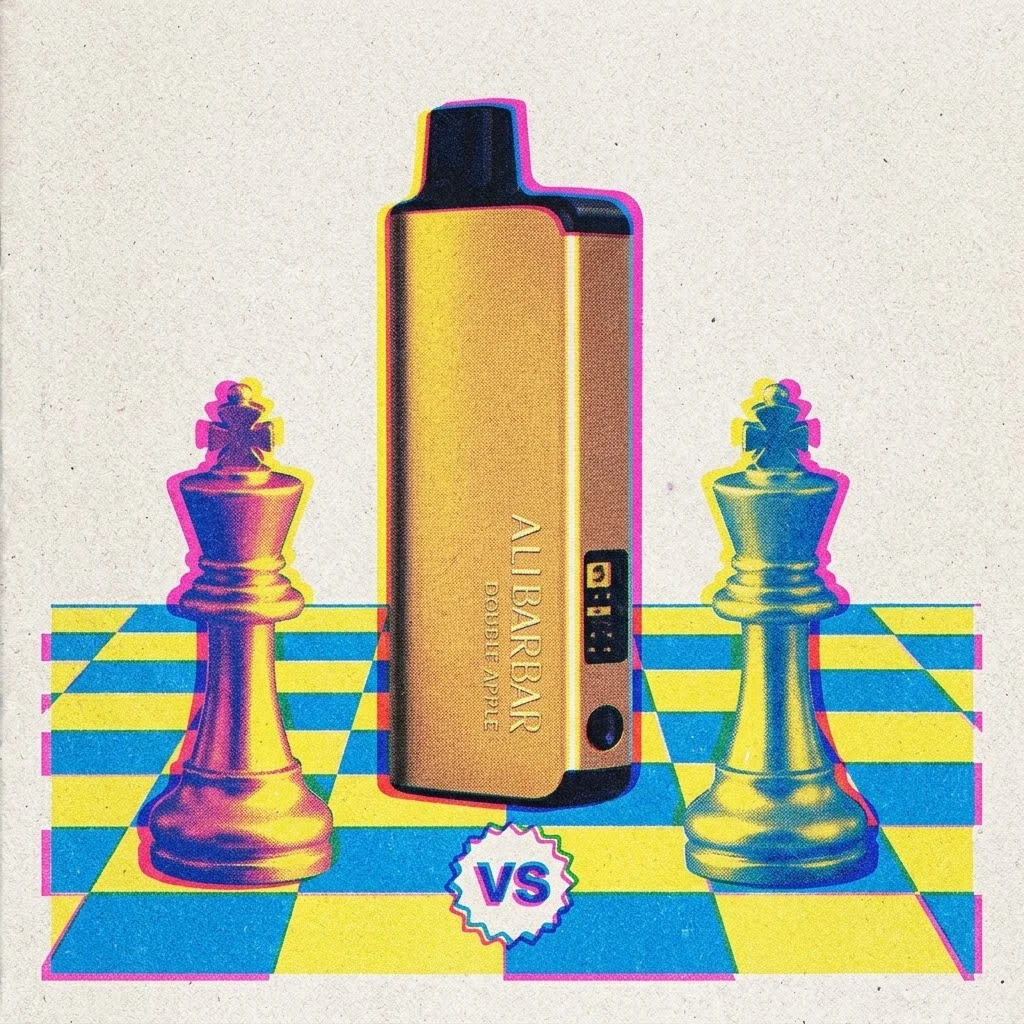
Alibarbar Ingot 9000 vs KUZ LUX 9000 — The Honest Australian Comparison
The Short Version
Alibarbar Ingot 9000 is the better pick if flavour range and a more distinctive body matter most to you, even though it costs A$12 more at a typical A$60. KUZ LUX 9000 is easier to justify on raw maths because A$48 for an advertised 9,000 puffs works out slightly cheaper per thousand puffs. If you mainly want the lowest sticker price, choose KUZ LUX; if you care more about flavour variety and feel, the Alibarbar is worth the small extra spend. Still weighing options? The browse-all range lines up every model we stock side by side. Buying more than one? Bundle & Save trims the price once you stack packs.
The TGA product standards for unapproved therapeutic vapes cap nicotine at 50 mg/mL (5%), and every device compared below sits inside that limit.
At a Glance
On paper, these two are close enough that a spec sheet alone will not settle it. Both advertise 9,000 puffs, but the hardware inside differs: the Ingot carries 22ml on a sealed 2,350mAh cell, while the KUZ LUX pairs 11ml with a rechargeable 1,000mAh battery. The real differences come down to price, body shape and flavour range.
| Feature | Alibarbar Ingot 9000 | KUZ LUX 9000 |
|---|---|---|
| Advertised puffs | 9,000 | 9,000 |
| Typical price | A$60 | A$48 |
| E-liquid capacity | 22ml | 11ml |
| Battery | Non-rechargeable 2,350mAh | Rechargeable 1000mAh |
| Standout point | Ingot-style chassis and wider flavour choice | Slightly cheaper entry price |
| Best suited to | People who prioritise flavour range and finish | People who want the lower upfront cost |
Price and Value Per Thousand Puffs
At the reference prices used here:
- Alibarbar Ingot 9000: A$60 ÷ 9 = about A$6.67 per thousand puffs
- KUZ LUX 9000: A$48 ÷ 9 = about A$5.33 per thousand puffs
That is an A$12 difference across the whole device, or about A$1.34 per thousand advertised puffs. Over a week, most occasional users would not notice it. For someone buying regularly or adding several devices to a bundle, the maths starts to matter more.
The honest way to read this is simple: KUZ LUX wins on sticker price. If the Alibarbar has a flavour you actually enjoy and the KUZ does not, paying A$12 more is usually the better outcome than saving A$1 and ending up with something you leave in a drawer.
Bundle discounts can flip this order, so compare the live checkout price before deciding.
Design, Battery and Australian Summer Practicality
The Alibarbar Ingot gets its name from the squared-off ingot-style body. It feels more deliberate than many generic bars, with a shape that sits flat in the hand and is easy to identify in a bag. The trade-off is that squared corners take up slightly more pocket space than a slim cylinder. If you carry it in tight jeans, it is noticeable; in a work shirt pocket, glovebox or laptop sleeve, it is fine.
KUZ LUX keeps a more familiar large-disposable layout. It does not have quite the same novelty factor, but the simpler shape can be easier to grip and stash. Neither should be treated as indestructible: both carry lithium cells, both should stay away from keys or loose metal objects, and neither belongs on a dashboard in the sun.
Summer is where careless storage hurts performance. An Australian car cabin can climb well past 40°C on a January afternoon. Heat accelerates e-liquid thinning, stresses batteries and can make the outer shell uncomfortably hot. For either model:
- keep them out of direct sunlight;
- do not leave either in a parked car overnight;
- let a hot device cool before using or charging;
- stop using it if the casing warps, leaks or gets unusually hot.
On the KUZ, expect battery top-ups during the device’s life; a flat battery does not mean the liquid is finished.
Flavour and Draw Performance
This is where the two separate more clearly.
Alibarbar Ingot 9000 has the broader flavour selection of the two. That matters more than people expect once the novelty wears off. A device lasting thousands of puffs needs a profile you will not get sick of by day three. The Ingot’s wider menu gives you a better chance of finding a fruit, drink-style or menthol-leaning option that suits your usual taste, and its ingot body tends to feel like the more “finished” product of the pair.
KUZ LUX 9000 competes mostly on price and straightforward usability. Its draw is aimed at the familiar disposable style: uncomplicated, accessible and easy to pick up if you have used similar devices before. Its narrower lineup gives less room to move if your first-choice flavour misses. Draw strength can also vary between units, batches and puff length; short mouth-to-lung draws usually taste steadier than rapid chain-puffing. If flavour depth is your priority, Alibarbar is the safer start.
How Long Each One Really Lasts
The advertised 9,000 puffs is best treated as a benchmark, not a stopwatch guarantee. Ratings assume controlled testing; real usage varies with draw length, heat and storage.
A rough guide:
- Light user — 50 puffs/day: about 180 days at rated output.
- Moderate user — 150 puffs/day: about 60 days at rated output.
- Heavy user — 300 puffs/day: about 30 days at rated output.
Many people finish earlier because longer draws and hot weather consume liquid less efficiently. Between these two, the practical question is which one you will still enjoy near the end; a cheaper device abandoned early is poor value.
Servo Stops, Road Trips and Everyday Buying
There is a reason servo searches come up so often in Australian vape comparisons. A petrol station is convenient when you are halfway between Sydney and Melbourne, doing a late-night Bunnings run, or stuck near a regional highway with nothing open. But servo stock is unpredictable: flavours are limited, popular lines sell out fast, and devices may have sat in a warm display for weeks.
Online ordering means waiting for delivery, but it gives clearer stock visibility, age checks, published pricing and a better chance of getting the exact flavour. For a road trip, charge beforehand, pack away from sunlight, avoid leaving either in a parked ute and bring a cable.
Which One Should You Buy?
Choose the Alibarbar Ingot 9000 if:
- you want the wider flavour range;
- you prefer the more distinctive ingot-style body;
- you are happy to pay A$12 more for a model that feels less generic;
- you plan to use one device over a longer period and do not want to tire of the flavour quickly.
Choose the KUZ LUX 9000 if:
- your first filter is the lowest typical price;
- you already know you like the available flavour options;
- you want a straightforward large disposable without extra fuss;
- you are building a multi-device order and every dollar matters.
Buy whichever is cheaper after discounts if: you see both as interchangeable and flavour experience is secondary.
Australian Rules and Safety Basics
Australia’s vape rules are not just one national checklist. The TGA sets requirements for therapeutic vaping goods, including nicotine-containing products, and states and territories add their own enforcement and supply rules. Retail arrangements, prescription pathways, packaging and age checks can change, so it is worth checking the current TGA information plus your state health department guidance before ordering.
For consumers, the practical points are steady:
- adult-only products;
- nicotine is addictive;
- non-smokers should not start vaping;
- pregnant people should not use nicotine products;
- compliant retailers should verify age and follow applicable packaging and supply rules;
- avoid grey-market sellers with no clear contact details or compliance information.
If you are using vaping to move away from cigarettes, ask a pharmacist or doctor about nicotine strength and your state’s current access pathway.
FAQ
1. Alibarbar Ingot 9000 vs KUZ LUX 9000: which is better overall?
There is no single winner for everyone. KUZ LUX is marginally cheaper at about A$5.33 per thousand advertised puffs versus about A$6.67 for the Alibarbar. Alibarbar has the stronger case if you value its wider flavour selection and ingot-style design. If you only compare price, KUZ LUX wins clearly; if you compare overall ownership, choose the flavour and body you are more likely to stick with.
2. Are both legal to buy in Australia?
Nicotine-containing vapes are regulated through the TGA framework, with further state and territory rules affecting supply and possession. Buy only from reputable adult-age-verified retailers, keep up with current state guidance, and avoid offers that ignore age checks or compliance requirements.
3. Which lasts longer?
Both advertise 9,000 puffs, so neither has an official lifespan advantage. Real-world life depends heavily on how long and how often you inhale, heat exposure, battery care and whether the flavour remains enjoyable.
4. Is the Alibarbar worth the extra A$12?
Often, yes. The A$12 difference is real, but the Alibarbar’s wider flavour range reduces the chance of flavour fatigue. If a specific KUZ LUX flavour suits you better, then the saving is worth taking. Value is not just arithmetic; it is whether you actually finish the device.
5. Can I take either one to a servo or road trip stop?
You can carry a vape according to local rules and venue policies, but servos are not the best place to rely on for replacement stock. Selection is limited and storage conditions vary. For a long drive, charge the device beforehand, keep it out of the sun and bring your own cable rather than hoping the nearest servo stocks what you need.
6. Do bundles make either one cheaper?
Cloud Collective’s Bundle & Save discounts 3-piece, 5-piece and 10-piece bundles, and Cloud Storm members earn points on orders. Bundles can change the value ranking, especially if they reduce the Alibarbar below the usual KUZ LUX price. Check the live bundle price before deciding.
7. What should I do if the flavour turns dry?
Stop using it for a while and check the battery first. A low battery can feel like weak flavour or reduced vapour. If the device still tastes dry after resting — or after a charge, for the KUZ — stop using it. Do not open, refill or modify either model; that creates leak and battery risks and may affect any consumer protections.
8. Which one is easier to buy genuine in Australia?
Both are sold through compliant Australian retailers, but the faster filter is knowing the real price and packaging. For the Ingot 9000, our where to buy guide lists what a genuine unit should cost and look like, and the fake vs real guide covers the checks. If a KUZ or Alibarbar deal looks far below the going rate, treat it as a red flag.
9. How do I compare the Ingot against other big 10,000-puff options?
We have run the same comparison against the main rivals: the IGET BAR PRO duel, the IGET Bar duel and the HQD Slick Pro duel. Read those alongside this one to see how the Ingot 9000 handles price per 1,000 puffs, battery and flavour across the field.