
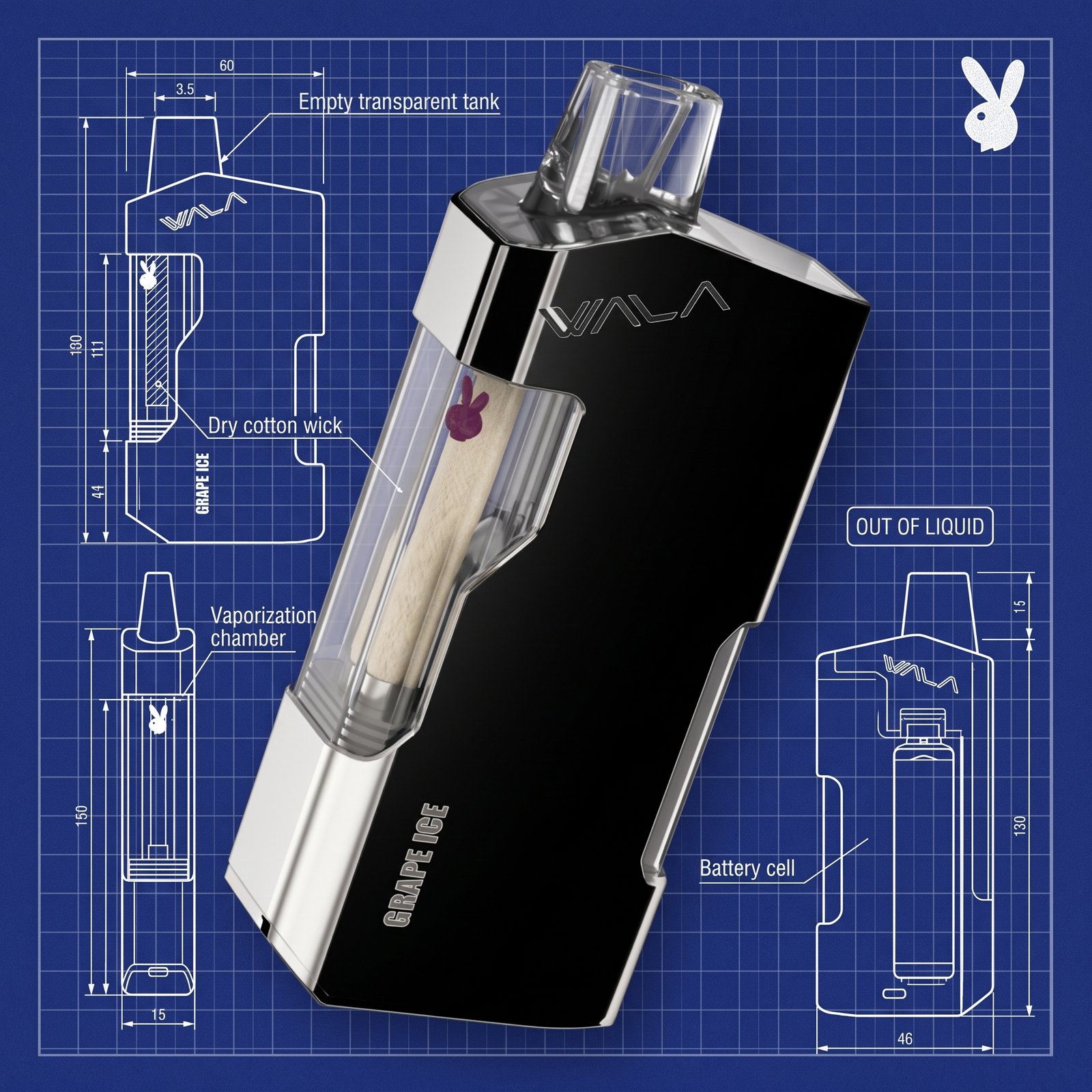
What Happens When a Disposable Vape Runs Out of Liquid?
The Short Version
When the liquid runs low, most disposables give weaker flavour, less vapour, a warmer or sharper draw, then a burnt taste as the wick runs dry. Stop using it, put it aside to cool, and recycle it at a battery or e-waste drop-off rather than opening, refilling, or binning it. A realistic check on your daily puffs and local price — say a WALA POP 10000 Puffs at about A$45–A$65 — tells you whether you need one backup, a larger model, or simply cooler storage.
What is actually inside a disposable
A sealed disposable combines a small liquid reservoir, a wick, a coil, an airflow path, a sensor or button, and a lithium cell. When you inhale, liquid moves through the wick to the coil, heats into aerosol, and leaves through the mouthpiece. Once the reservoir is empty, that process keeps trying to work without lubrication: the wick dries, the coil overheats quickly, and the taste changes.
Most modern devices hide the tank, so you cannot judge remaining liquid by holding it up to light or shaking it. Some have translucent windows, but condensation, colouring, shadows, and foam padding make them unreliable. The clearest signal is usually the draw itself.
What happens as the liquid gets low
The first stage is easy to miss. Flavour becomes fainter, especially sweet or cooling notes, because the mixture left near the coil is concentrated rather than fresh. Vapour feels thinner even though the battery still responds.
The second stage usually arrives during longer sessions. The draw gets warmer, slightly harsher, or papery. If you pause for a minute and take another puff, it may seem normal again because a little liquid has crept back toward the wick.
The third stage is unmistakable: a dry, acrid, burnt taste and little vapour. At that point, the cotton has probably scorched. Waiting will not turn it back into usable flavour. Continuing just makes the experience unpleasant and adds heat stress to a battery you are about to throw away.
Some devices also gurgle or spit before they finish. That can mean condensation or liquid pooled in the centre tube. Wipe the mouthpiece with tissue and stand it upright for an hour. If the problem clears, you may still have useful liquid. If the gurgle returns with weak flavour, it may be nearly finished.
Why the battery does not prove there is liquid left
Rechargeable disposables confuse many people. A USB-C port means the battery can be topped up; it does not mean the liquid supply is unlimited. A large rechargeable model can reach the end of its liquid while the battery still lights the LED or produces a warm, empty draw.
That design exists because high-capacity cells lose voltage over weeks, long draws, and heat. Charging helps the coil work properly while liquid remains. It does not restore flavour once the wick has run dry. If the device charges fully and still tastes like scorched paper, treat it as finished.
What to do when it runs out
- Stop using it. One more puff rarely answers anything and often tastes worse.
- Put it on a hard, heat-safe surface away from curtains, bedding, papers, and children or pets.
- Let it cool for 30–60 minutes if it felt hot.
- Wipe the mouthpiece, stand it upright, and try one gentle draw later only if you genuinely think liquid remains.
- Check the charge if it is rechargeable, using the manufacturer’s cable and a standard certified wall adapter — never a laptop port or fast charger unless instructions allow it.
- If the burnt taste returns, stop permanently and move it to safe storage until you can recycle it.
What not to do
Do not open the casing. Sealed reservoirs are not designed for refills, and DIY refilling can flood the airflow, expose the battery, contaminate the coil, or leave unknown ingredients in contact with hardware. Do not add water, food flavouring, homemade glycerine mixtures, or liquid from unlabelled bottles.
Do not chain-puff to “use up” the last drops. That is the fastest way to scorch the wick and overheat the device. Do not put it in a pocket with keys or coins, leave it on a car dashboard, or continue using anything swollen, cracked, leaking, wet, or unusually hot.
Puff counts, cost and realistic lifespan
Puff counts are lab-style estimates, not promises. A short mouth-to-lung draw may sit closer to two seconds, while a deep direct-lung draw can consume far more liquid per puff. Long inhales, hot weather, chain vaping, and high airflow settings all shorten real life.
Use simple maths instead of hoping. If a WALA POP 10000 costs A$52, advertises 10,000 puffs, and you get 8,000 in real use, that works out to about 0.65 cents per actual puff. At 120 puffs per day, it lasts roughly 67 days and costs about 78 cents per day. At 250 puffs per day, the same device lasts about 32 days and costs about $1.63 per day.
A smaller advertised 6,000-puff model at A$35 delivering 4,800 real puffs costs about 0.73 cents per puff. At 250 puffs per day, that is under 20 days. The larger device can be better value, but only if storage habits are decent and you actually finish it fresh. Leaving a half-used device in summer heat wastes both options.
If you find yourself rationing puffs by Wednesday and buying another disposable on Friday, track usage for one week. The answer is not shame — it is information. You may prefer a higher-capacity model such as WALA POP 10000 Puffs or Alibarbar Ingot 9000, fewer backups stored well, or a planned reorder.
Australian heat, servos and storage mistakes
Australia punishes forgotten vapes. A parked car, ute tray, glovebox, caravan drawer, tin-roof room, or black beach bag can climb far above outdoor temperature on a February afternoon. Heat thins e-liquid, ages sweeteners, softens seals, and stresses lithium cells. A servo stop is handy for fuel and shade, but the boot is not a storage cupboard.
Keep a spare indoors at roughly room temperature, upright or flat with the mouthpiece up, in a drawer away from sunlight, steam, heaters, and cleaning products. If a device sat in a hot car, let it return to room temperature, wipe the mouthpiece, wait an hour, and take one gentle draw. Flavour may recover; cooked liquid or a stressed battery may not.
Never leave a device charging overnight, on bedding, beside curtains, or in direct sun. If it becomes hot while charging, disconnect it safely and move it away from flammable materials only if it is safe to touch.
Buying a replacement under TGA rules
The Therapeutic Goods Administration sets national rules for nicotine vaping products, while states and territories add their own supply and enforcement requirements. Age verification, ingredient and nicotine limits, packaging, batch traceability, and lawful sales channels matter. A compliant Australian retailer should make those controls clear, not bury them behind a discount code.
Price alone is not proof of quality. Extremely cheap listings, missing brand pages, stock photos from overseas, or sellers that avoid age checks often lead to stale liquid, poor coils, fake puff counts, or no support if a parcel arrives damaged. Look for clear product details, real local pricing, delivery information, and accessible terms. Read the Cloud Collective compliance page before buying and check your own state or territory rules if you are unsure.
How to dispose of a finished vape
A finished disposable contains a lithium battery plus plastic, metal, mesh, and nicotine residue. Household recycling is the wrong destination because batteries can spark in sorting machinery. Do not place it loose in kerbside bins.
Keep the finished device upright in a cool, dry container away from metal objects until you can take it to a battery recycling point, council e-waste drop-off, or retailer collection bin. Many Australian councils now accept vapes as e-waste. If a device leaks, put on gloves, avoid skin contact, seal it in a labelled container, and follow the drop-off operator’s damaged-battery guidance. If it is hot, smoking, or swollen, move people and pets away first and seek fire-safety advice if there is immediate risk.
FAQs
How do I know when my disposable vape is out of liquid?
Look for fading flavour, thin vapour, a warmer draw, and finally a burnt or papery taste. If a rechargeable device charges normally but still gives little vapour with no flavour, assume the liquid is finished. Shaking or holding it against light is unreliable.
Can I add liquid to a disposable vape?
No. Opening a sealed device can damage the coil, flood the airflow, disturb the battery, and introduce liquid that was never made for that hardware. It also removes important safety and compliance information. Buy a new compliant device instead.
Why does my vape taste burnt when it still charges?
Charging proves the battery has power, not that liquid remains. The coil can burn a dry wick even when the LED works. Pause for an hour and try one gentle draw if you suspect liquid is left, but stop immediately if the burnt taste persists.
Is it bad to take a few last puffs after the burnt taste starts?
It will not help and can feel awful. The wick has likely already scorched, so each puff creates heat with little flavour. Stop, let it cool, and prepare it for battery or e-waste recycling.
How long should a WALA POP 10000 Puffs last?
At 120 moderate puffs a day, 8,000–10,000 real-world puffs could last roughly two to three months. At 250 deeper puffs a day, the same device may finish in about five to six weeks. Heat and long draws reduce the total further.
Are expensive disposables always cheaper per puff?
Not always, but larger models often cost less per advertised puff. Compare real price divided by a realistic number of puffs, not the label maximum. A well-stored WALA POP 10000 can beat several small bars, while a neglected large device can still be poor value.
Where can I recycle finished vapes in Australia?
Start with your council’s battery or e-waste guidance, community recycling centre, or a participating retailer collection point. Keep terminals protected and do not put vapes in kerbside recycling. For damaged or leaking devices, use the operator’s damaged-battery procedure rather than dropping them into a public bin.