
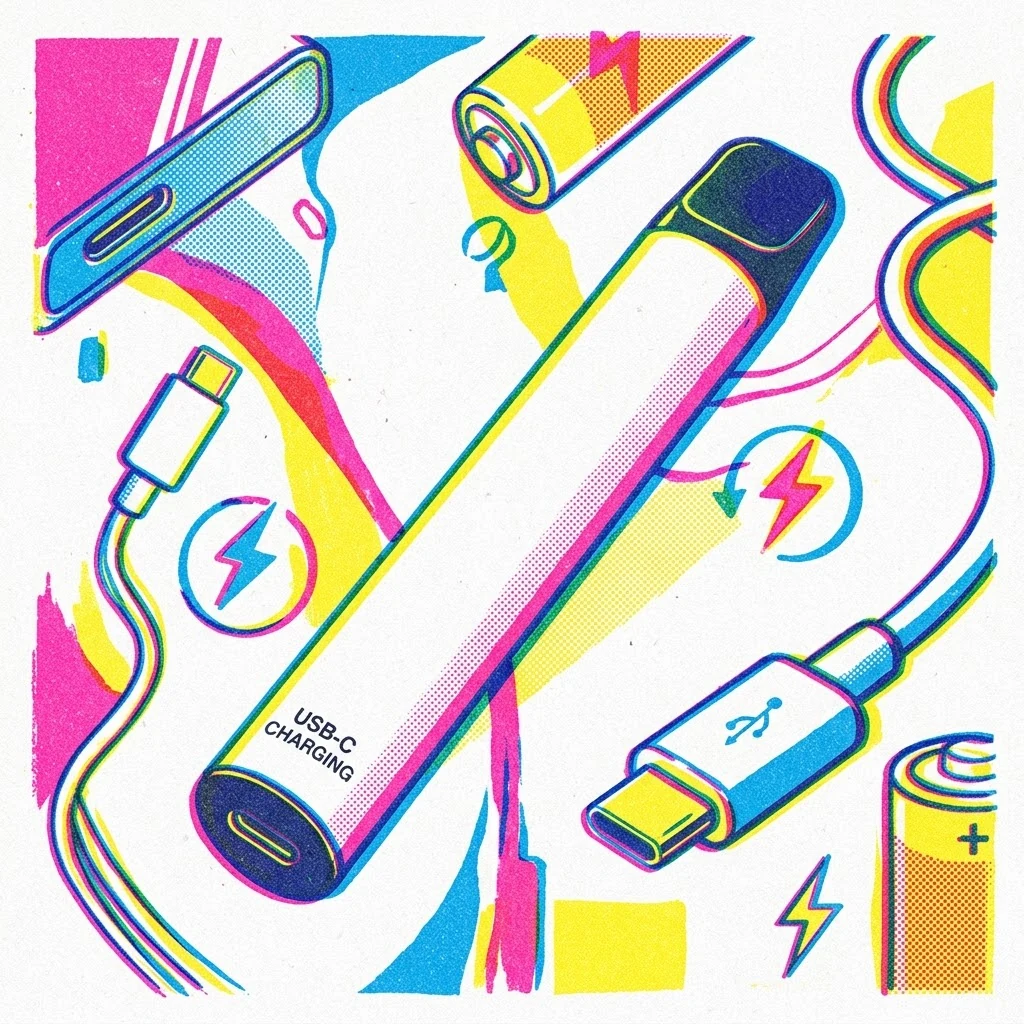
How to Charge the HQD Slick Pro: Safe Charging Guide (2026)
The Short Version
Charging the HQD Slick Pro is straightforward: it runs on a chargeable 900 milliamp-hour cell, so you can top the battery back up while the 12 mL tank still has liquid in it. Use a low-power charger with the supplied cable, unplug when it’s full, and never leave it charging overnight unattended. For a moderate vaper that works out to roughly a day and a half to two days between charges, while a heavy vaper will top it up nightly. The battery is sealed and non-replaceable, so when the 12 mL tank runs dry, the device is retired. Charge it gently, keep it cool, and stop the moment it feels hot. The full guide below covers what you need, the routine, and the mistakes that kill sealed disposables. Still weighing options? The browse-all range lines up every model we stock side by side. Buying more than one? Bundle & Save trims the price once you stack packs.
The TGA product standards for unapproved therapeutic vapes cap nicotine at 50 mg/mL (5%), and every device compared below sits inside that limit.
1. What Kind of Battery the Slick Pro Has
It’s Sunday night and the footy’s gone to the wire. You reach for the Slick Pro on the coffee table, take a draw, and the hit feels weak — thin vapour, faint flavour. The tank is still half full, so it’s not the liquid. It’s the battery.
That moment is exactly why the Slick Pro’s chargeable cell matters. Inside the slim body sits a 900 milliamp-hour battery, and unlike the classic single-use bars that go in the bin when the cell dies, this one can be charged back up while the tank still has liquid to burn. For a 10,000-puff device with a 12 mL tank, that’s the difference between retiring the device at half life and using most of what you paid for.
One thing to be clear about up front: the battery is sealed and non-replaceable. There’s no door, no swap-in cell, no way to service it. That’s the disposable bargain — you’re charging the battery to keep up with the liquid, not to keep the device forever. When the tank is empty, the device is done, and the 900 milliamp-hour cell goes with it.
What that means for charging: treat the battery like any other lithium cell — with respect. A gentle charge routine is the difference between a Slick Pro that delivers its full 10,000 puffs and one that fades early.
2. What You Need to Charge It
The Slick Pro comes with everything you need to charge it in the box:
- The supplied charging cable — use this one first; it’s matched to the device.
- A low-power USB adapter — the kind that came with an old phone is ideal.
That’s genuinely all you need. What you should NOT reach for:
- Fast-charging bricks (anything rated 30W or higher) — modern fast chargers can push more current than a sealed disposable needs. The device’s protection usually steps in, but a gentle charger is always the safer choice.
- Laptop power delivery ports and mystery third-party cables — unnecessary stress, or a fire risk if the cable is damaged.
If you only remember one thing: the gentler the charger, the better. A low-power adapter from an old phone is perfect.
3. Step-by-Step: Charging the HQD Slick Pro
Charging the Slick Pro takes about thirty seconds of your time:
- Locate the charging port on the device. It’s a small opening in the body, usually tucked into one of the edges — if you’re not sure where it is, check the base of the device first.
- Plug the supplied cable in gently. The plug fits one way; if it won’t go in, flip it. Never force it.
- Connect the other end to your low-power adapter, then plug the adapter into the wall.
- Let it charge. Many devices in this class show a light or indicator while charging; if yours does, you’ll see it. If it doesn’t, don’t panic — just time it and unplug when the time is up.
- Unplug when it’s full. Don’t leave it sitting on the charger overnight.
No app, no button combos, no tricks. Warm while charging is normal; hot means unplug immediately.
4. How Often Will You Need to Charge?
The honest answer depends on how much you vape:
- A moderate vaper (200–300 puffs a day) gets roughly a day and a half to two days per charge; a heavy vaper tops up nightly; a light vaper might charge it a couple of times a week.
Either way, with 12 mL of liquid rated for 10,000 puffs, most users will recharge the Slick Pro several times before the tank runs dry — the battery keeps up with the liquid instead of quitting first.
A useful habit: charge when the draw starts to feel weak, not when the device is completely dead — draining a lithium cell to zero, over and over, shortens its life.
5. Battery Care: 7 Rules for a Sealed Cell
These seven rules apply to every sealed disposable battery:
- Charge before it’s fully flat. Top it up when the draw weakens — usually well before the cell hits zero.
- Use a low-power charger. The gentler, the better.
- Don’t charge overnight. An hour or two is plenty; unplug when done.
- Keep it cool while charging. No direct sun, no car dashboard in summer.
- Stop if it gets hot. Warm is normal; hot means unplug now.
- Keep it dry. If the device has been wet, let it dry fully before plugging in.
- Inspect the cable. If it frays at the connector, replace it.
Follow those and the 900 milliamp-hour cell will comfortably see out the tank.
6. What NOT to Do (Common Mistakes)
Battery problems with disposables come from a short list of repeat mistakes:
- Don’t charge under a pillow or in bed. This is how batteries overheat — and it’s entirely avoidable.
- Don’t leave it on the charger overnight, night after night. The built-in protection helps, but every extra hour at 100% stresses the cell.
- Don’t use a fast charger or laptop power delivery port. It’ll probably work — and it’s still the wrong tool for a sealed disposable.
- Don’t charge in a hot car. Summer turns a parked car into an oven.
- Don’t charge a damaged device. Cracked casing or a hard drop means retire it, not plug it in.
- Don’t keep vaping a device that’s running hot. A persistently hot device isn’t normal, and it isn’t going to fix itself.
7. When the Slick Pro Is Done
The Slick Pro has a fixed lifespan, and that’s by design. The 12 mL tank holds the liquid; the sealed 900 milliamp-hour cell powers it. When the tank runs dry — usually two to three weeks of moderate use, in line with the 10,000-puff rating — the device is finished.
When that day comes:
- Don’t pry it open. The battery is a sealed lithium cell; puncturing it is a genuine safety risk.
- Don’t bin it without checking your state’s rules. Many Australian states treat e-cigarettes and lithium batteries as e-waste.
- Don’t buy a “refillable” hack kit for it. Devices like this are built sealed; aftermarket refills damage the device, and the liquid isn’t verified.
A Slick Pro that’s been charged gently, kept cool, and retired cleanly is a device that did its job — 10,000 puffs at a typical market price of A$47.
A note from us: HQD isn’t currently in our range at Cloud Collective, so we can’t sell you one — and we won’t pretend otherwise. If you’re shopping today, browse what’s in stock at Cloud Collective; our WALA devices ship Australia-wide in plain, unmarked packaging.
8. FAQ
Is the HQD Slick Pro chargeable?
Yes. It runs on a 900 milliamp-hour cell that you can charge back up while the tank still has liquid. The battery is sealed — when the 12 mL tank runs dry, the device is done.
How long does the battery last between charges?
For a moderate vaper, roughly a day and a half to two days. A heavy vaper will top it up nightly.
How long does it take to charge?
It depends on the charger — a low-power adapter takes longer but is gentler on the cell. The practical advice is simple: plug it in, check it periodically, and unplug when it’s full.
Can I use a fast charger on the Slick Pro?
It will usually work — the device has built-in protection — but it’s not recommended. A low-power adapter is always the safer choice for a sealed battery.
Can I vape while it’s charging?
Not recommended. Charging and heating at the same time stresses the battery. Wait for the charge to finish.
What happens when the tank runs out?
The device is finished — the battery is sealed and the tank can’t be refilled. Dispose of it properly, ideally through your local e-waste program.