
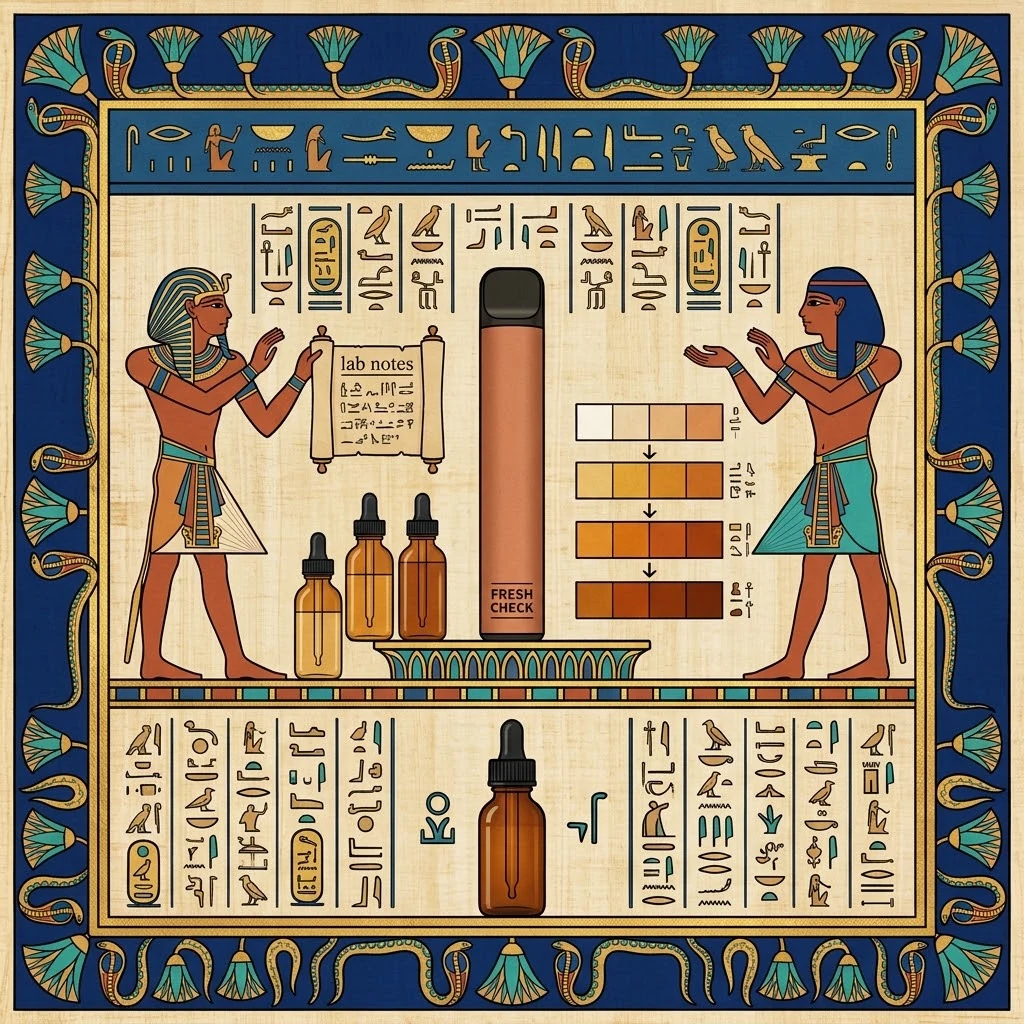
Why Did My Vape Juice Turn Dark Brown? Nicotine Oxidation Explained
The Short Version
A brown colour change usually means the liquid has aged through contact with oxygen, light or heat — especially nicotine oxidation — and it does not automatically mean the device is dangerous. Check it like an adult, not with panic: if the shell is intact, there is no leaking, swelling, burning smell or harsh taste, one gentle draw after cooling and resting upright is usually enough to judge it. If the device was left in a hot Aussie car, servo forecourt, beach bag or parcel box during summer, expect duller flavour and faster browning; store replacements at room temperature and stop using any device that is damaged, overheating or tastes persistently burnt. Still weighing options? The browse-all range lines up every model we stock side by side. Current colours and stock are listed on the WALA yo 18000 puffs product page.
What the brown colour actually is
Fresh e-liquid often looks straw-yellow, gold or pale amber. As it gets older — or gets hotter — the same liquid can move through amber, tea-brown, cola-brown or almost treacle-dark. That process is usually chemical ageing rather than “dirt”. Inside a sealed disposable, the visible liquid sits near cotton, a coil, metal parts and sometimes a mesh chamber, so colour changes can also come from concentrated residue left by sweeteners and flavouring.
The important distinction is between colour alone and colour plus other signs. Dark liquid in a cool, intact device may simply be older stock or oxidised nicotine. Dark liquid plus a cracked shell, oil around the base, a sour smell, gurgling after every draw, swelling, heat or a burnt taste points to a different problem.
Why it happens faster in Australia
Heat accelerates nearly every reaction that ages e-liquid. An Australian summer makes this obvious. A parked car cabin can climb far above the outside temperature, a black bag on the beach can cook a device quickly, and a tin-roof garage or west-facing windowsill keeps warm well into the evening. Even a servo stop matters on a road trip: buying a fresh device and leaving it in the glovebox while you continue driving can expose it to hours of heat.
Most devices are designed for ordinary room temperature, roughly 15–25°C, not repeated days above 30°C. Heat thins the liquid, helps oxygen move through the reservoir, stresses seals and ages battery chemistry. Sweeteners and flavour concentrates can darken more visibly when they sit warm for long periods. Cooling afterwards may cause condensation, so repeatedly moving a vape between extreme heat and refrigerated air is not helpful.
Australia’s retail context also matters. Nicotine vaping products are nationally regulated under TGA arrangements, with additional state and territory requirements. A compliant retailer should provide clear product information, batch details, age verification and storage guidance. If a device arrives already dark, leaking or oddly smelling, photograph it, stop using it and contact the seller rather than trying to open or repair it.
Nicotine oxidation in plain English
Nicotine naturally reacts with oxygen over time. Light and heat speed that reaction up, and some flavour families make the colour change easier to see. Oxidised nicotine commonly turns liquid toward amber or brown. It can taste slightly pepperier, less bright or flatter, but oxidation by itself is not the same as contamination.
For disposables, you cannot remove oxygen or replace the liquid. The useful controls are simple: buy stock that has not been mishandled, keep it cool, keep it out of direct sun, and use older devices before newer ones. If you rotate several spares, label the purchase date on the box with a marker. It takes ten seconds and prevents the “which one is oldest?” guess later.
Other reasons e-liquid turns brown
Sweeteners and flavour residue
Dessert, candy, cola and fruit-and-candy flavours often contain heavier sweeteners. Over time, or under heat, those compounds can darken. In reusable kits this is often called coil gunk because caramelised residue builds up on the coil. A disposable uses the same broad principle, although you cannot service it. If a formerly bright flavour becomes brown but still smells clean, residue and ageing are likely involved.
Heat exposure
Direct sun, dashboards, boot floors, toolboxes, hot-water cupboards and delivery vans all accelerate browning. This is one reason high-capacity rechargeables such as a WALA POP 10000 or an Alibarbar Ingot 9000 deserve better treatment than a set of keys: many sell around A$45–A$95 depending on model and bundle, and poor storage wastes both flavour and rated puffs.
Long storage
Even ideal storage slows oxidation; it does not stop it. Liquid can continue to mature in a sealed device. A six-month-old spare may look darker even if it never became hot. For the freshest experience, buy what you will reasonably use rather than building a large backup pile.
Damage or leakage
Brown liquid outside the mouthpiece, around the airflow holes, on the USB-C port or inside packaging is not just cosmetic. Wash your hands, wipe the outer surface with tissue, do not charge it if the port is wet, and retire the device. Do not rinse it under a tap or puncture the shell.
How to tell whether it is normal
Use this calm checklist:
- Shell: Is the body intact, dry and not swollen?
- Colour location: Is the dark colour only inside the liquid window, or is there residue around the mouthpiece and base?
- Smell: Does it smell like its usual flavour, slightly muted, or sour/chemical?
- Temperature: Has it returned to room temperature after heat exposure?
- Draw: After resting upright, is the draw smooth or dry, harsh and burnt?
- Battery: For rechargeable models, does charging work normally without unusual heat?
If the answers are “intact, inside only, familiar smell, room temperature, smooth, normal”, the brown colour is probably ordinary oxidation or flavour ageing. If any answer raises doubt, stop using it and ask the retailer using photos and order details.
What to do step by step
- Move the device out of heat and sunlight. Let it reach room temperature for at least thirty minutes; longer if it came from a hot car.
- Wipe the mouthpiece and body with a dry tissue. Check the airflow holes and USB-C port for moisture.
- Look carefully for cracks, swelling, leaks, dents or oil marks.
- Stand it upright for fifteen to sixty minutes if it has been lying down or transported sideways.
- Take one short, gentle draw. Avoid long pulls until you know how it tastes.
- If it tastes merely duller, continue gently and watch how it performs.
- If it tastes burnt, sour, metallic or chemical, stop. Resting overnight rarely rescues a burnt coil or spoiled liquid.
- If it still seems mostly full but performs badly, contact the seller with photos, batch details and your order number.
Do not open the device to inspect the liquid. Disposable batteries and coils are not designed for home servicing, and the small amount of saved liquid is not worth the injury risk.
Storage rules that prevent browning
- Store indoors at roughly 15–25°C, ideally in a drawer or case.
- Keep it out of direct sunlight, including window sills and car consoles.
- Keep it away from heaters, dryers, ovens, hot-water systems and laundry appliances.
- Do not leave it in the glovebox, boot, toolbox, caravan, shed or gym bag parked in the sun.
- Store upright when possible and cap or cover the mouthpiece if unused.
- Keep boxed until use and out of reach of children, pets and anyone who might mistake it for something else.
- Buy sensible quantities. Smaller models commonly sit around A$25–A$40, while larger rechargeables are often A$45–A$95. Buying more only saves money if you finish it while the flavour is still good.
- Rotate stock: oldest active, newest stored, and mark the purchase date if necessary.
Refrigeration is unnecessary. Condensation can form when cold hardware meets warm air, and that creates moisture problems around the mouthpiece and charging port. Room temperature is the target.
When to stop using a disposable
Stop immediately if the device is swollen, cracked, wet inside the port, unusually hot, smells burnt or chemical, produces sharp pain in the throat, or continues tasting burnt after resting. Also stop if liquid escapes from vents or the battery indicator behaves strangely. Take photographs and contact the retailer for warranty or safety guidance.
For finished devices, treat them as e-waste rather than household recycling. Many Australian councils and battery drop-off points accept used vapes, but acceptance varies. Keep the device intact, follow local instructions about terminals, and transport it away from loose coins or keys until drop-off.
FAQs
Is dark brown vape juice dangerous?
Not necessarily. Browning is often caused by nicotine oxidation, heat or ageing flavour compounds. Judge the whole device, not just the colour. Intact shell, familiar smell and smooth draw suggest ordinary ageing; leaks, swelling, overheating, sour odours or persistent burnt taste mean stop using it.
Can I still use a vape that turned brown?
Usually yes if it stayed sealed, cool-ish, leak-free and undamaged, and it tastes acceptable after resting upright at room temperature. Colour alone does not prove spoilage. But if the liquid smells off, the throat hit feels harsh beyond usual, or the coil tastes burnt, continuing will not improve it.
Why did my vape juice turn brown without being used?
Time, oxygen, light and residual heat continue to act even when nobody draws on it. A spare left in a car, sunny room, delivery locker or warm drawer can oxidise much faster than one kept indoors. Long storage also allows sweeteners and flavours to darken gradually.
Does refrigerating a vape stop browning?
It is not recommended. Cooling slows reactions, but condensation becomes a bigger practical issue, especially around the mouthpiece and charging port. Repeatedly moving a device between heat and refrigerated air can also stress seals. A stable indoor drawer is better.
How hot is too hot in an Australian summer?
There is no single universal limit, but aim for room temperature. Repeated days above about 30°C accelerate ageing, and a closed car can far exceed that. If a device feels warm to the touch after being stored somewhere sunny, let it cool fully, inspect it and take a gentle test draw before using it normally.
Is vaping legal in Australia in 2026?
Nicotine vaping remains regulated under national TGA rules, with state and territory laws affecting supply, possession pathways and enforcement. Requirements continue to change, so check the TGA and your state health authority before purchasing. Adults should use compliant, age-verified retailers and keep products away from minors.
How many puffs should I expect from a larger disposable?
Advertised figures such as 10000 puffs assume controlled draw length and testing conditions. Real-world results vary with puff duration, heat, airflow, battery management and how often the device rests between sessions. Some users get close to the printed count; others finish the liquid sooner because they take longer draws.