
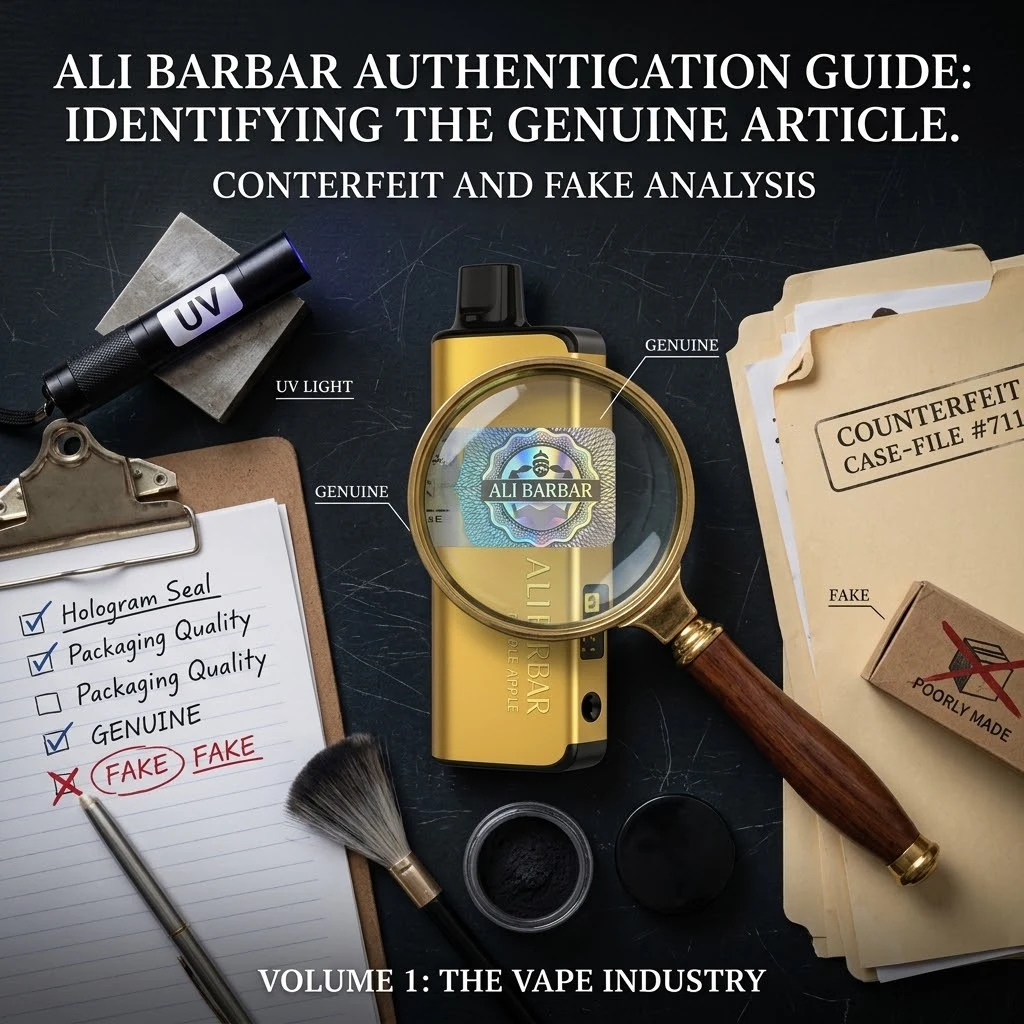
Real vs Fake ALIBARBAR Ingot 9000: How to Spot a Counterfeit in Australia
The Short Version (For the Impatient)
It’s Friday night in Brisbane and your mate’s back from the markets with an “Ingot 9000” for thirty bucks. Feels like a win — until the first puff tastes like burnt plastic and the battery’s dead by Sunday. Counterfeit vapes are a genuine problem in Australia, and the Ingot 9000 — one of the most popular 9,000-puff devices in the country — gets faked like the rest of the Alibarbar family. Here’s how to tell the difference, up front:
Counterfeit vapes are everywhere in Australia, and the ALIBARBAR Ingot 9000 gets faked like the rest of the Alibarbar family. The first red flag is always price: a genuine Ingot 9000 carries a typical market price of around A$60, so anything well under that should set off alarm bells. Fakes routinely fail the basic checks — rough printing, missing or smudged security stickers, QR codes that lead nowhere, and labels that don’t match the real specs. A genuine Ingot 9000 is a 9,000-puff, 22 ml, brand battery non-rechargeable device with 5% nicotine salt — if the label or the device doesn’t add up, walk away. The same checks that work on the bigger ALIBARBAR INGOT 9000 work here, because the family shares the same packaging approach and security features. Buy from a reputable Australian retailer and you dodge almost all the risk — browse what’s in stock at Cloud Collective for devices from verified channels.
That’s the short version — the full checklist, from box to first draw, is below.
1. Why Counterfeit Vapes Are Everywhere (and Why They’re Not a Bargain)
Counterfeiters follow demand, and the Ingot 9000 — the mid-size Alibarbar option with a brick-shaped body, candy-and-soda style flavours and a typical market price of around A$60 — has plenty of it. Where there’s demand, there are fakes.
Why it matters: a fake isn’t just a waste of money. Counterfeits can contain unregulated coils, mystery liquid with unknown nicotine levels, and batteries with no safety certification. Legitimate vapes sold through proper Australian channels are subject to TGA and state regulation; a counterfeit answers to nobody.
2. The Price Test: The A$60 Rule
Price is the fastest filter. A genuine Ingot 9000 has a typical market price of around A$60 for 9,000 puffs; if you’re offered one for dramatically less — say half — treat it as a counterfeit until proven otherwise.
Two caveats: price alone proves nothing — some counterfeiters sell fakes at full price, betting you’ll never check — and genuine units occasionally go on special at legitimate retailers. Treat price as the first screen, not the last word.
3. Packaging: Print, Holograms and QR Codes
The box is where most fakes give themselves away. Go through it slowly:
- Print quality. Genuine units carry clean, sharp printing; fakes often have blurry logos, off colours or misaligned text. Check the small print — that’s where corners get cut.
- Security stickers and holograms. Many vapes in this class, Alibarbar included, ship with holographic security stickers that shift colour as you tilt the box. A flat, dull, obviously printed “hologram” is a bad sign.
- QR codes. Scan it. A genuine code usually leads to the brand’s or retailer’s official site; a dead link, random landing page or unscannable code is a red flag. Counterfeiters copy QR codes too, so a working code is one check among many, not proof.
- Warnings and legal text. Genuine packaging carries proper health warnings and 18+ compliance text; missing warnings or mangled English is a classic fake tell.
- Batch and lot numbers. Genuine units carry batch or lot stamps. Missing stamps — or the same number repeated across different boxes — are bad signs.
4. The Spec Check: Does the Label Add Up?
Here’s the spec sheet of a genuine ALIBARBAR Ingot 9000, straight from the public product data:
| Spec | Genuine ALIBARBAR Ingot 9000 |
|---|---|
| Puff count (rated) | 9,000 |
| E-liquid capacity | 22 ml |
| Battery | Brand battery, non-rechargeable |
| Nicotine strength | 5% (50 mg) nicotine salt |
| Typical market price | Around A$60 |
Now check the device and box labels against this list. Common tells: a “9,000 puff” device with a printed 1000 mAh rechargeable spec (genuine units show no charging port), an undersized tank that clearly holds far less, or nicotine strength printed as anything other than 5%. If the label doesn’t match, the unit isn’t genuine — however good the box looks.
5. Build Quality: What to Look For in Your Hand
Hold the device before you buy it if you can, and run through these checks:
- Seams and joins. Genuine units are assembled cleanly — no rough edges, no visible glue. Fakes typically show sloppy joins where the body halves meet.
- The mouthpiece. It should seat snugly and firmly. A wobbly or ill-fitting mouthpiece is a classic counterfeit tell.
- Weight and feel. A genuine unit has a solid, consistent heft; fakes often feel hollow and cheap, with thin plastic that flexes when squeezed.
- The charging port. A genuine unit shows no charging port at all; any visible port opening suggests a fake or a mislabelled older design.
- Rattle test. Give it a gentle shake. Loose internals rattling around inside are never a good sign.
None of these are scientific — just the common-sense checks you’d use on any electronics purchase — and they catch a surprising number of fakes.
6. The First-Draw Test
If you’ve already bought it, the first session will usually tell the truth. The most commonly reported differences between genuine units and fakes:
- Flavour consistency. Genuine units deliver consistent flavour from the first draw; fakes often taste burnt or chemical early on, or the flavour fades within days.
- Leaking. Stored and used normally, a genuine device shouldn’t leak from day one; mouthpiece or base leaks are a common fake symptom.
- Throat hit. Both carry 5% nicotine salt on paper, but a fake’s throat hit is often harsh and scratchy in a way the real thing isn’t.
- Battery life. A genuine Ingot runs its full 22 ml on the factory charge; a fake that dies after ten minutes has a toy battery inside.
If yours fails these tests, stop using it — and don’t charge it unattended while you decide what to do.
7. Where to Buy a Real Ingot 9000 in Australia
The best protection is where you buy. Legitimate Australian retailers:
- Display clear TGA and compliance information
- Verify your age at checkout — 18+ verification is a legal requirement for nicotine vape sales in Australia
- Ship with tracking and discreet, plain packaging
- Stand behind what they sell — real shops answer when something’s wrong
Skip classifieds, social media sellers, market stalls and resale groups — that’s the counterfeit heartland. A “shop” with no compliance page, no age verification and no contact details isn’t a shop.
When you’re ready to buy, browse what’s in stock at Cloud Collective, where devices come from verified channels with discreet Australia-wide shipping, tracking on every order, and rewards points on every dollar spent. If the Ingot 9000 isn’t the one, the WALA POP 10000 and WALA YO 18000 are the closest alternatives worth comparing.
8. FAQ
How common are fake ALIBARBAR vapes in Australia?
How much does a fake Ingot 9000 cost?
Can a fake vape be dangerous?
Does a working QR code prove the device is real?
What should I do if I think I’ve bought a fake?
Do the same checks apply to the ALIBARBAR INGOT 9000?
What about other Alibarbar names like ICE ADJUST or TEQ?
The checks in this guide work for any Alibarbar-branded device, whatever the model name on the listing — including other official lines such as the Ice Adjust (12,000 puffs) and the Ingot 15000. Naming can still vary between sellers and markets, so treat a mixed or unfamiliar name as a caution flag rather than proof of anything. Run the same checks from this guide on the device you receive. The current sealed reference point is the ALIBARBAR Ingot 9000, and our where to buy guide shows what a genuine unit costs.